

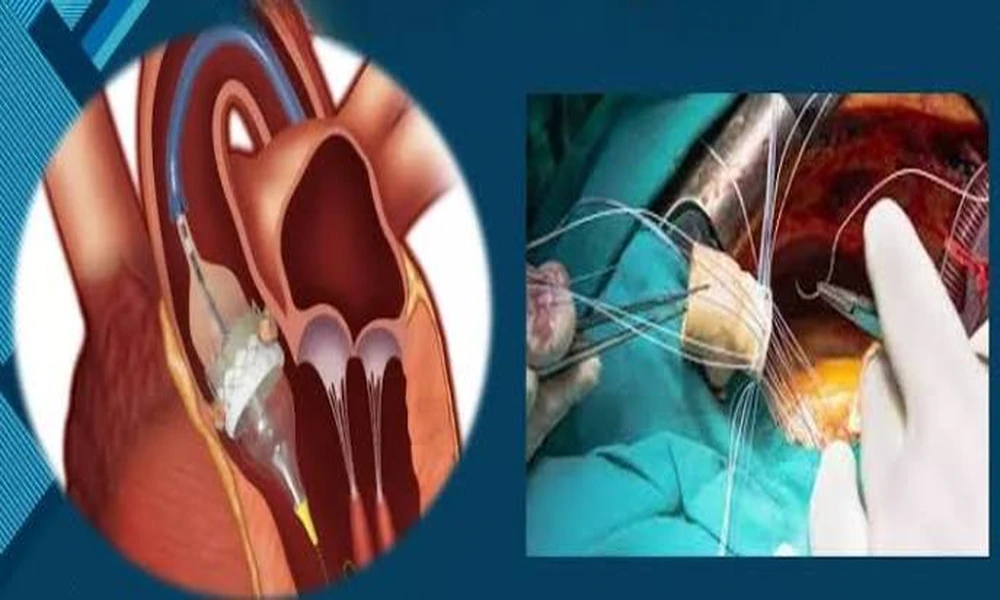
Mitral regurgitation occurs when the mitral valve does not close properly and allows blood to leak backward from the left ventricle into the left atrium. When the leak becomes severe, the heart may have to work harder to maintain forward blood flow. Patients can develop breathlessness, tiredness, reduced exercise capacity, swelling or repeated heart-failure symptoms.
For some patients, mitral valve surgery is the preferred treatment. Others may be considered for a catheter-based approach called transcatheter edge-to-edge repair, or TEER. MitraClip is one of the devices used to perform TEER.
The procedure does not replace the mitral valve. Instead, it brings selected parts of the valve leaflets together so they close more effectively and reduce the amount of backward leakage.
How Does the TEER Procedure Work?
During a TEER procedure, a catheter is usually introduced through a vein in the groin and guided to the right atrium. The team then crosses the wall between the right and left atria using a controlled transseptal puncture.
The clip-delivery system is positioned above the mitral valve under fluoroscopic and echocardiographic guidance. The device grasps the mitral leaflets at the area where the leak is occurring. When the team confirms that regurgitation has been reduced without creating excessive narrowing, the clip is released.
Some patients require more than one clip to achieve an acceptable result.
Who May Be Considered for MitraClip?
MitraClip is mainly considered for selected patients with significant mitral regurgitation whose valve anatomy is suitable for edge-to-edge repair. The reason for the regurgitation is important.
Primary mitral regurgitation is caused by a structural problem in the valve itself, such as leaflet prolapse or flail. Surgery, particularly valve repair, remains an important treatment when a patient can undergo an operation with acceptable risk.
TEER may be considered for selected patients with severe primary regurgitation when surgical risk is high and the anatomy is suitable.
Secondary mitral regurgitation develops because the left ventricle or atrium changes shape and prevents otherwise relatively normal leaflets from closing effectively. In appropriately selected patients who remain symptomatic despite optimal medical treatment for heart failure, TEER can be an important option.
Why Anatomy Matters
Not every leaking mitral valve can be treated with a clip. Transoesophageal echocardiography is used to study the valve in detail. The team evaluates leaflet length, location of the regurgitant jet, valve area, calcification, coaptation and other anatomical features.
The aim is to predict whether the device can securely grasp the leaflets and reduce regurgitation without creating clinically significant mitral stenosis.
Patients considering MitraClip in Mumbai should therefore expect detailed imaging before a procedure is recommended.
Symptoms and Heart-Failure Treatment
For secondary mitral regurgitation, TEER is not usually the first step. Patients need careful evaluation of heart-failure therapy, blood pressure, rhythm and, when appropriate, cardiac resynchronisation treatment.
If significant regurgitation remains despite appropriate therapy and the patient continues to have symptoms, the Heart Team can assess whether TEER may improve symptoms and reduce future heart-failure burden.
This is why MitraClip decisions should involve both valve specialists and clinicians experienced in heart failure.
What Are the Potential Benefits?
The main goal is to reduce the severity of mitral regurgitation. When successful, less blood leaks backward into the left atrium, which may reduce pressure in the lungs and improve symptoms such as breathlessness and fatigue.
The catheter-based approach also avoids a conventional sternotomy. This can be particularly valuable for older, frail or medically complex patients who face higher risks from open-heart surgery.
Benefit depends heavily on choosing the right patient. A technically successful clip procedure may provide limited improvement if symptoms are mainly caused by advanced disease outside the valve.
What Risks Should Patients Understand?
Possible complications include bleeding, vascular problems, stroke, infection, damage to the heart or valve, abnormal heart rhythm and complications related to transseptal puncture.
The clip may not reduce the leak enough, or in uncommon situations it may not remain attached as intended. Excessive leaflet approximation can also create mitral stenosis, which is why pressure measurements and imaging are checked before the device is released.
A detailed MitraClip procedure guide can help patients understand the steps and questions to discuss with the treating team.
What Happens After TEER?
Patients are monitored after the procedure for bleeding, rhythm changes and other complications. Echocardiography checks the degree of residual regurgitation and the pressure across the repaired valve.
Hospital recovery is often shorter than after open-heart surgery, although timing varies according to age, general health and the clinical course.
Follow-up remains important because the team needs to assess symptoms, heart-failure medicines, valve function and the condition that originally caused the regurgitation.
The Heart Team Decision
Mitral regurgitation is more complex than simply measuring how much blood is leaking. The underlying cause, ventricular function, pulmonary pressures, coronary disease, rhythm, surgical risk and valve anatomy all affect treatment.
A multidisciplinary Heart Team can compare surgery, TEER, medical therapy and other interventions without assuming that the least invasive procedure is automatically the best one.
The Bottom Line
MitraClip offers a minimally invasive way to reduce mitral regurgitation in carefully selected patients. It is particularly relevant when severe leakage remains clinically important and surgery is unsuitable or when selected patients with secondary regurgitation remain symptomatic despite appropriate heart-failure treatment.
The strongest results come from matching the treatment to the mechanism of the disease and the patient’s anatomy. Detailed echocardiography, clinical assessment and Heart Team review are therefore just as important as the clip procedure itself. For patients with severe mitral regurgitation, that evaluation helps determine whether TEER can provide meaningful symptom relief and a safer route to valve treatment.
